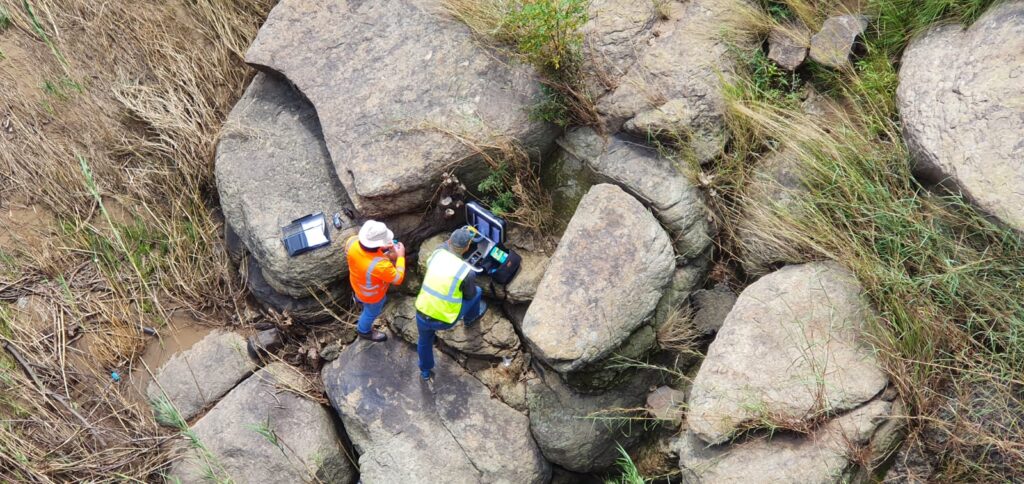
Like most people I often get asked what do I do? When I respond that I am a hydrogeologist focusing on the management of contaminated land, mostly contaminated soil and groundwater, I get varied responses. Most people have never heard of this but generally people find this interesting. As if they have never really thought that a career like that could exist. To be honest I also never knew that you get professional Netflix watchers or even professional mourners or dog food tasters so there is always room to get to know what you don’t. But where I believe my profession is different to the odd careers I mentioned above is the severity of the impact that contaminated land could have on human health or the environment if not managed. Citizens at large are rarely aware of the land quality on which they live and how contamination can affect them. However, as has been well documented globally it can have life-threatening impacts.
South Africa is one of the most developed countries in Africa and has a rich industrial and mining history. The abstraction of our natural resources and the establishment of strong industries has allowed our country to be a leading force in the African market and in turn has allowed the citizens of our country to lead better lives. However, this does come at a cost as all developments have an impact on the environment with some positive or manageable while others having been severely detrimental to human health and the environment. Its how these factors are balanced that ensures that the overall impact remains positive now and in the future as these impacts can be persistent.
In particular impacts to soil and groundwater can be largely unseen and the sources of impact varied. But just because it cant be seen doesn’t mean that is should be ignored! For example the Lancet Commission on Pollution & Health found that pollution causes 9 million premature deaths and that 90% pollution related deaths occur in low-income and middle-income countries. The toxins from contaminated land leach into the groundwater and can severely impact our limited water resources. The Department of Water Affairs has revealed that close to 300 towns and 65% of the population are entirely dependent upon this resource for their water supply. In a water stressed country the contamination of our groundwater resources can be devastating to many rural communities and cities that are dependent on it for its source of water.
What is the current situation in South Africa you might ask? Well the Department of Forestry, , Fisheries and the Environment (DFFE) have published a register of contaminated land as per the requirements of the National Environmental Waste Act, 2008. When I last checked the list had 438 sites that are or have been classified as contaminated. The vast majority of sites (or >80%) are fuel related with 357 sites being categorized where petroleum was the main nature and origin of contamination. According to the South African Petroleum Industry Association (SAPIA) South Africa has 4,600 registered fuel retail sites across the country. Considering the number of sites registered on the contaminated land database just under 8% of all fuel sites are recorded on the contaminated land database. This seems expected and no reason for concern you can think. Well this is only the top of the iceberg as these sites are mostly voluntarily reported to the department. To be effective, legislation needs to have teeth. South Africa has really outstanding, world class environmental legislation in place, but it’s not enforced heavily and consistently enough in my opinion. The multi-national companies – which have well entrenched policies and procedures around social responsibility and the environment – generally manage their contaminated land risks appropriately. However other companies will only comply with requirements if they know that the regulators will actually enforce the law. So we run the serious danger of policing only those who abide by the law.
Based on my working experience in the contaminated land sector in South Africa over the past 20 years I believe there are many more sites that should be recorded on our national contaminated land database. A glaring gap on the register is the chemical, mining and manufacturing sectors. Not to say that they are all contaminated or that the polluters are not remediating their impacts but rather shows that there is under reporting of contaminated sites to the authorities. For example information on the number of chemical sites in South Africa is not readily available but according to the Chemical and Allied Industries’ Association, an industry group, the chemicals industry is a key sector of the South African economy. It accounts for about 25% of the nation’s manufacturing sales and is the most developed of its kind in Africa. Yet on the contaminated land database only 7 sites have been registered stating a chemical nature and origin of contamination was present.
As for mining South Africa has a long history of mining. The country has more than 5,000 derelict and abandoned mines and many of these have been simply fenced off. Legally, the government is responsible for cleaning up derelict and abandoned mines, but money is tight and the land isn’t desperately needed, so decontamination isn’t seen as a priority. Although mining impacts have been governed by mining specific legislation the noticeable absence of contaminated mining sites to our national register of contaminated sites is obvious.
You cannot solve a problem you don’t understand and if we don’t have a clear grasp on the extent of contaminated sites across South Africa we cant start to solve this for our future generations. The solution to this is complex and multidisciplinary but should revolve on the capacity building of our regulators and the clear enforcement of our environmental laws. Secondly, the investigation of contaminated land should be undertaken by suitably qualified scientist who understand the risks posed to human health and the environment through the implementation of environmental due diligence and sound site investigation and remediation techniques. Thirdly, land owners, regulators and operators should complete a thorough review of the life cycle of the facility or operations and include the setting aside of sufficient environmental provisions for the decommissioning and decontamination of infrastructure and the rehabilitation of contaminated land.